
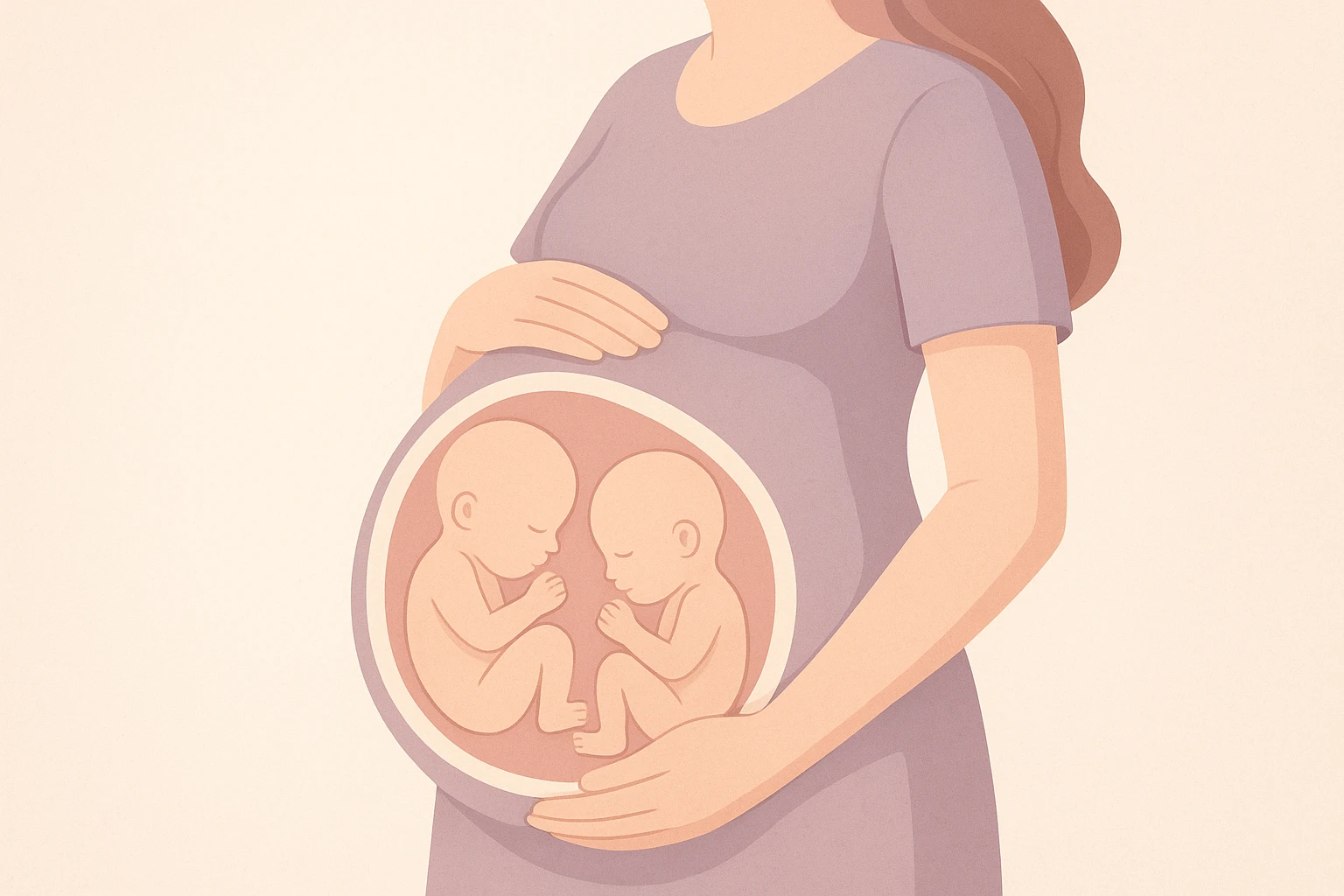


Pregnancy with twins or higher-order multiples brings a very different rhythm, a different care schedule, and a different set of decisions than a singleton pregnancy. This guide gives you a practical, medically informed overview of what to expect, how to prepare, and how the WP Ultimate Ovulation & Pregnancy Calculator can help pregnancy-focused websites deliver clearer, more useful guidance to readers searching for twin pregnancy seo and multiples blog content.
Whether your audience is newly shocked by a positive test, already tracking a twin gestation week by week, or researching monitoring, nutrition, delivery, and nursery prep, this special guide is designed to answer the questions they are most likely to ask and to support them with trustworthy resources from major medical organizations and parent-support groups.
A multiple pregnancy is not simply “a bigger version” of a singleton pregnancy. It often requires more frequent prenatal visits, more ultrasounds, closer growth surveillance, and more careful planning around preterm birth risk, blood pressure, and nutrition. Mayo Clinic notes that people carrying multiples can expect more-frequent checkups, more weight gain, and earlier delivery than in singleton pregnancies. Johns Hopkins Medicine also explains that twin pregnancies vary greatly depending on whether the babies share a placenta or amniotic sac, which can significantly change the risk profile.
That is why high-quality pregnancy websites benefit from dedicated twin and multiples content rather than trying to squeeze everything into a generic pregnancy article. A focused page can help readers understand the difference between dichorionic and monochorionic pregnancies, why monitoring changes over time, and when specialist care becomes important.
One of the first questions clinicians ask after twins are identified is whether the pregnancy is dichorionic-diamniotic, monochorionic-diamniotic, or monochorionic-monoamniotic. Johns Hopkins describes two placentas and two amniotic sacs as the most favorable arrangement, while one placenta and one amniotic sac is the rarest and riskiest configuration because of cord entanglement and nutrient-sharing complications.
Brigham and Women’s Hospital similarly emphasizes that surveillance recommendations differ by twin type, including more frequent follow-up for monochorionic pregnancies and routine growth checks every four weeks for uncomplicated dichorionic-diamniotic twins. That difference is exactly why a strong multiples blog needs content that goes beyond the headline “you’re having twins.”
Early twin pregnancy often begins with surprise, uncertainty, and a lot of questions. Some people learn they are carrying twins at the first ultrasound, while others discover multiples later if one embryo was initially missed. Jackson Health describes a typical early timeline where the first ultrasound confirms twins and later scans track heartbeats, limbs, and organ development.
In practice, the first trimester is usually about confirming viability, determining chorionicity if possible, and setting up the follow-up schedule. Brigham and Women’s recommends integrated serum screening with first-trimester nuchal translucency measurement for twin pregnancies, and it notes that invasive diagnostic options such as CVS or amniocentesis remain available when appropriate.
Screening decisions can be more complex in twins than in singleton pregnancies. Brigham and Women’s explains that all women carrying twins are candidates for routine aneuploidy screening, but cell-free fetal DNA testing in twin pregnancies comes with a higher risk of false positives and false negatives. That means providers often interpret results more cautiously and may recommend additional counseling or diagnostic testing depending on age, risk factors, and pregnancy type.
This is valuable content for readers, but it is also excellent material for a pregnancy website that wants to rank for search intent tied to twin pregnancy seo: users are not just looking for inspirational stories; they are actively searching for practical guidance on screening, safety, and what comes next.
Multiple pregnancies usually involve more prenatal surveillance because the risk of preterm birth, growth discordance, and hypertensive disorders is higher than in singleton pregnancies. Mayo Clinic says women carrying multiples can expect more-frequent checkups, frequent ultrasounds or other tests, and closer monitoring for premature labor as pregnancy progresses. American Pregnancy Association also notes that multiple pregnancies typically involve more frequent prenatal visits and ultrasounds, with increased monitoring used to manage complication risks.
Brigham and Women’s gives a clear example of how imaging protocols can differ by twin type: bladder and amniotic fluid are assessed every two weeks, growth is assessed every four weeks, and uncomplicated di-di twins are generally followed starting at 24 weeks on a four-week interval. Monochorionic pregnancies need even closer attention.
Brigham and Women’s recommends cervical length assessment at the anatomy scan, again at 22–24 weeks, and again at 28 weeks. It also notes that if cervical length becomes concerning, it should be followed more closely and that steroid treatment may be considered when risk of preterm labor is high after 24 weeks.
One of the most persistent myths about twin pregnancy is that you should “eat for three” in a literal sense. Johns Hopkins explains that nutritional guidance is not based simply on the number of babies you are carrying; it is individualized, and on average caloric needs increase by about 40% in twin pregnancy. Mayo Clinic adds that for people who began pregnancy at a healthy weight, the usual recommended gain for twins is 37 to 54 pounds, and that many people can meet this with about an extra 600 calories per day.
Pampers provides similar guidance, noting that healthy weight gain in twin pregnancy may range from 37 to 54 pounds for people who were at a normal weight before pregnancy and that an additional 600 calories per day may be needed in the second half of pregnancy depending on activity level.
Johns Hopkins notes that people pregnant with twins should generally take the same prenatal vitamins used in any pregnancy, while physicians may recommend extra folic acid and iron to help reduce the risk of iron-deficiency anemia. Because the best plan depends on starting weight, nausea, medical history, and fetal growth, individualized care is still the standard.
Consider a reader at 18 weeks with dichorionic twins who has nausea, reduced appetite, and fatigue. A useful article would not just say “eat more.” It would explain that the care team may monitor weight gain, recommend smaller but more frequent meals, and watch for iron deficiency if the patient’s energy remains low. That is the kind of practical content that makes a multiples blog genuinely useful rather than generic.
Expecting twins often means finding a new balance between rest and movement. Akron Children’s recommends getting ample rest, especially in the second and third trimesters, while also staying active with light exercise to reduce stress and improve sleep quality. Cone Health also suggests practical sleep positioning strategies such as lying on the side and using a pillow between the legs for alignment and circulation support.
That advice matters because fatigue is common in multiple pregnancies, and sleep becomes harder as the uterus grows. The goal is not to be “perfectly productive”; it is to conserve energy, protect sleep, and reduce strain when possible.
Akron Children’s also recommends preparing for the babies’ arrival early, including buying duplicate essentials like cribs and car seats, freezing meals, and packing the hospital bag ahead of time because twins are more likely to arrive early.
Multiple pregnancy is associated with earlier delivery than singleton pregnancy. Johns Hopkins states that while 40 weeks is the full gestation period of the average pregnancy, most twin pregnancies are delivered at approximately 36 weeks, with a range of 32 to 38 weeks depending on circumstances. Mayo Clinic likewise notes that earlier delivery is common in multiple pregnancy and that induction or cesarean delivery may be recommended if labor has not started by a certain point in the third trimester.
Because of this, a twin pregnancy article should always help readers understand that “due date” is more of a target than a guarantee. A strong educational page explains the likelihood of preterm birth, the importance of hospital readiness, and the fact that delivery plans often change depending on fetal positions, placental sharing, and maternal health.
Johns Hopkins notes that even when a vaginal delivery is possible, twins are typically delivered in an operating room for safety and rapid response. That detail is important for patient education because it helps normalize why twin birth settings may look different from single-baby labor rooms.
One of the most important late-pregnancy issues in twins is whether both babies are growing at similar rates. Brigham and Women’s defines discordant fetal growth as a 20% difference in estimated fetal weight between the larger and smaller twin and notes that pregnancies with discordant growth and at least one growth-restricted fetus have a markedly higher risk of major neonatal morbidity.
In shared-placenta pregnancies, clinicians also watch for twin-to-twin transfusion syndrome, a complication Johns Hopkins identifies as a particular concern when twins share a placenta. This is why monochorionic pregnancies usually require closer surveillance than dichorionic pregnancies.
Many visitors to a pregnancy site do not need a textbook definition. They need a plain-language explanation: if one baby is lagging in growth or if shared placental blood flow becomes unbalanced, doctors may increase scan frequency, adjust the delivery plan, or refer to maternal-fetal medicine specialists. That is the kind of focused explanation that turns a blog article into a trusted resource.
Case-style examples help readers see how recommendations change in real life. Below are practical scenarios that mirror common concerns seen in twin-pregnancy counseling.
A patient discovers two fetuses on the first-trimester ultrasound. The main next step is to confirm chorionicity and set a surveillance schedule. According to Brigham and Women’s, uncomplicated dichorionic-diamniotic twins generally receive growth assessment every four weeks and more frequent checks if abnormalities appear. This reader would benefit from a clear explanation of upcoming scans, nutrition expectations, and warning signs that justify calling the office.
Another patient learns the babies share a placenta. Johns Hopkins explains that placental sharing increases the risk of complications such as twin-to-twin transfusion syndrome, and Brigham and Women’s notes that monochorionic pregnancies need more frequent monitoring. In a blog article, this scenario can be used to explain why doctors may schedule more ultrasounds and why “normal so far” does not mean “no future monitoring needed.”
A third patient is 30 weeks pregnant with twins, exhausted, and worried that she is not “doing enough.” Akron Children’s emphasizes rest, light activity, and practical preparation, while Mayo Clinic and Pampers both note that weight gain and caloric needs may be higher in twin pregnancy. A strong article can reassure the reader that energy conservation, meal prep, and early packing are not signs of weakness; they are smart preparation.
Preparation is not just about buying more things. It is about reducing stress, simplifying daily routines, and setting expectations before the babies arrive. Akron Children’s recommends buying duplicate essentials, freezing meals, and packing the hospital bag early. Pampers also recommends building support networks and considering childbirth classes designed specifically for parents of multiples.
For families already caring for other children, Cone Health suggests age-appropriate ways to involve siblings in the process, while also remembering that twins are two different people with their own needs and personalities. That kind of advice can be especially useful for a reader who is worried about logistics, not just medical facts.
If you run a pregnancy, parenting, or fertility-focused site, twin and multiple pregnancy content is one of the strongest opportunities for evergreen traffic. Readers searching for this topic usually want detailed answers, not a short overview. That makes it a strong fit for a content strategy built around twin pregnancy seo because the search intent is informational, urgent, and high-trust.
A high-performing article or content cluster can cover:
For internal linking, it also makes sense to connect readers to resources on your site that help them track ovulation, estimate fertile windows, and calculate pregnancy timelines with more precision. The WP Ultimate Ovulation & Pregnancy Calculator can support that content ecosystem by giving visitors an easy way to interact with timing-based pregnancy tools while they read educational articles.
When you mention medical guidance, specialist care, or support networks, it is useful to point readers toward recognized organizations and parent communities. Here are several reputable resources you can reference naturally within the article:
For publishers and marketers, a well-structured guide on multiples can outperform a shallow page because it captures several related search intents at once: “twin pregnancy symptoms,” “what to expect with twins,” “twin pregnancy weight gain,” “monochorionic vs dichorionic twins,” and “how often are twins monitored.” Those topics naturally support long-form educational content and make it easier to interlink related resources.
To keep the article useful and search-friendly, use a clear structure, answer high-intent questions early, and include authoritative references. A page like this can also support conversion by sending readers to tools and resources such as Contact Us when they need product help, partnership inquiries, or editorial support.
Other website sections that may be worth linking internally, depending on what your site offers, include pregnancy calculators, ovulation tracking tools, due-date estimators, and blog resources about early pregnancy planning. If you have additional article pages on your own site, this is a strong place to cross-link them because people researching twins often continue reading across multiple stages of pregnancy.
Twin and multiple pregnancy can feel overwhelming at first, but the core message is straightforward: with appropriate monitoring, individualized nutrition guidance, and early planning, many families move through the experience successfully and with confidence. The biggest differences are usually more appointments, more scans, earlier preparation, and a stronger need for support.
If you are building a pregnancy resource library, this is exactly the kind of subject that benefits from thoughtful, medically grounded writing and smart internal linking. A comprehensive multiples article can educate readers, reduce anxiety, and keep them engaged with your site as they move from early confirmation to delivery planning and newborn preparation.
For readers who want more support, the WP Ultimate Ovulation & Pregnancy Calculator can be a useful companion resource for timing-related pregnancy planning, while the Contact Us page offers a simple path to reach your team for questions or collaboration.
Families expecting twins or higher-order multiples deserve practical information, calm explanations, and reliable next steps, and that is exactly what this guide is designed to provide.











