
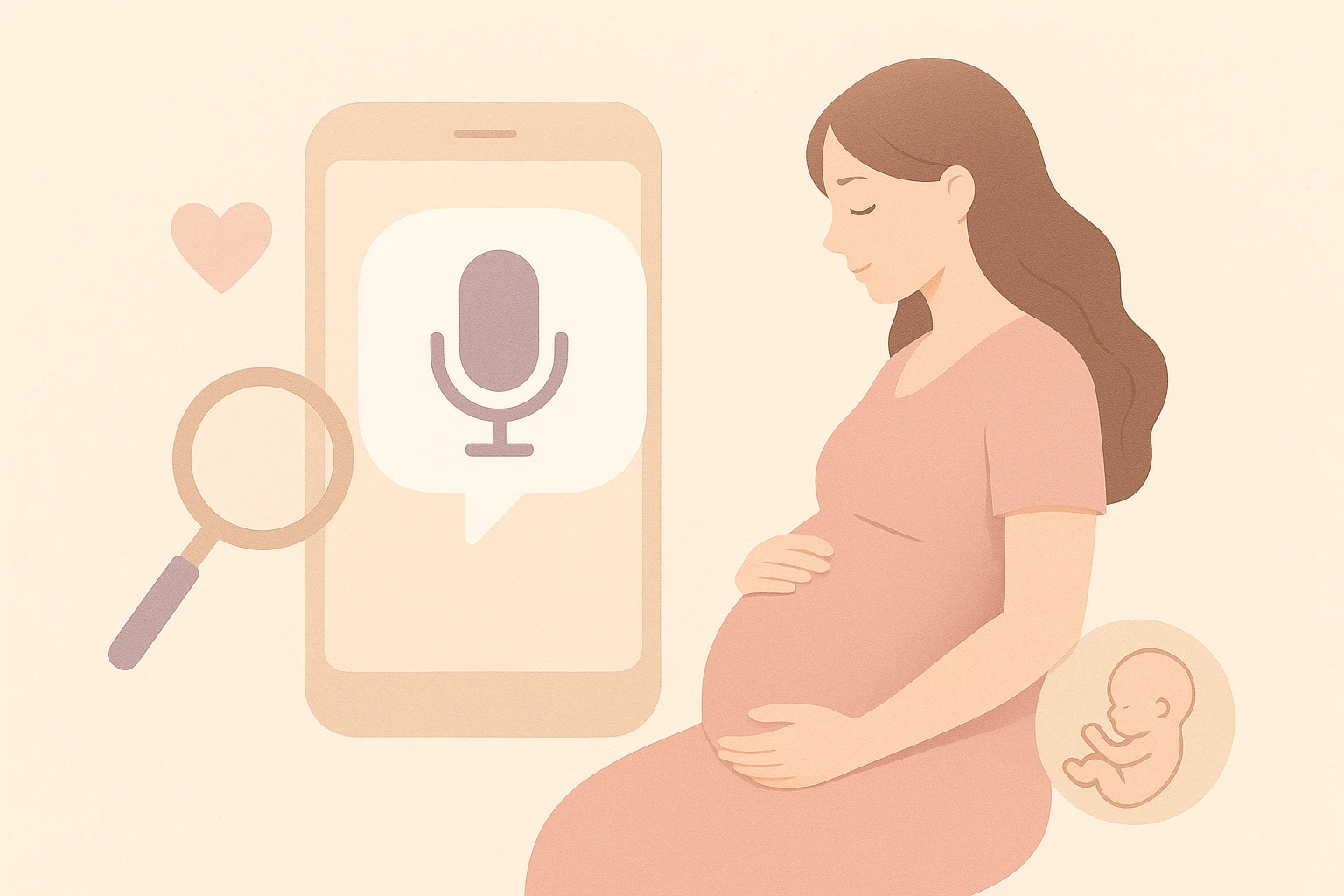


Expectant mothers today are using their voices more than ever before to find answers about pregnancy. Instead of typing "pregnancy symptoms week 12," they're asking their smart speakers "What symptoms should I expect at 12 weeks pregnant?" This fundamental shift in how people search for pregnancy information has transformed the digital landscape for pregnancy-related websites and services. If your pregnancy platform isn't optimized for voice search, you're missing out on a significant portion of your target audience. The future of pregnancy information discovery is conversational, and understanding how to optimize for these voice-based queries has become essential for any business serving expectant parents.
The way pregnant women and their partners search for pregnancy information has undergone a dramatic transformation in recent years. Voice search queries are typically more conversational and longer than traditional text-based searches, with expectant parents asking complete questions like "How accurate is the ovulation predictor test?" rather than simply typing "ovulation test accuracy."
This shift represents more than just a convenience factor. When someone is experiencing pregnancy symptoms at 2 AM or needs quick answers during a prenatal appointment, they're reaching for their phone and asking Siri, Google Assistant, or Alexa instead of typing out a full search query. The intimate nature of pregnancy-related questions makes voice search particularly appealing—many people feel more comfortable speaking their concerns aloud than typing them into a search engine where they might worry about privacy or judgment.
For pregnancy-related businesses and websites, this trend presents both a challenge and an opportunity. Voice searches are predicted to be conversational 80% of the time, meaning that websites optimized only for traditional keyword searches are becoming increasingly invisible to a growing segment of the pregnancy community. The good news? Voice search optimization is highly achievable when you understand the principles behind it.
That's where solutions like WP Ultimate Ovulation & Pregnancy Calculator come in—tools specifically designed to meet expectant parents where they are in their search journey. By integrating voice-search-friendly features into your pregnancy platform, you can ensure that your content reaches people precisely when they need it most.
The foundation of voice search optimization begins with understanding how expectant parents actually speak about their pregnancy concerns. Long-tail keywords are 1-6x more important than traditional search phrases in voice optimization, and they're the gateway to capturing voice search traffic.
Consider this example: A pregnant woman at week 8 might traditionally search "pregnancy symptoms." But when using voice search, she's more likely to ask "What are the most common symptoms I should expect at 8 weeks pregnant?" or "Is it normal to feel exhausted and nauseous at 2 months pregnant?" These longer, more specific phrases directly mirror how people naturally speak.
The strategy is straightforward but requires a fundamental shift in how you approach keyword research. Instead of chasing high-volume, short keywords, focus on natural phrases that reflect how people actually talk. Tools like AnswerThePublic are invaluable for this research—they reveal the actual questions pregnant women and their partners are asking about pregnancy topics.
Here are the types of conversational keywords that resonate with voice searchers:
Unlike traditional SEO where search volume matters greatly, in voice optimization specificity trumps search volume. A phrase with only 100 monthly searches that directly answers a specific pregnancy question is often more valuable than a phrase with 10,000 searches that's too broad to convert.
Voice assistants and AI chatbots don't browse websites the way humans do—they need content structured in a very specific way to extract the answers they're looking for. Content that addresses specific questions is 3-5 times more likely to be selected as a voice search result, making question-based content structure absolutely critical.
The most effective approach is organizing your pregnancy content around common questions your audience is actually asking. This might mean restructuring entire sections of your website or creating dedicated FAQ pages. For instance, instead of a generic page about early pregnancy symptoms, create a page specifically addressing "What are the earliest signs of pregnancy?" with a direct, clear answer in the opening paragraph.
Here's what effective voice-search-optimized pregnancy content looks like:
For pregnancy websites, this might look like creating an extensive FAQ section covering questions like:
Organizations like March of Dimes have successfully used this structured approach to provide pregnancy information that resonates across multiple platforms. Their content serves as an excellent model for how to organize pregnancy education in a way that's both human-friendly and voice-search-optimized.
Contact Us if you need guidance on restructuring your pregnancy content for voice search success—our team specializes in helping pregnancy platforms achieve optimal visibility.
When someone asks their voice assistant a pregnancy question, where does that answer come from? Often, it comes from what SEO professionals call "featured snippets" or "position zero"—the specially formatted answer boxes that appear at the top of Google search results.
Voice assistants frequently pull information from featured snippets to answer user queries, and schema markup increases your chances of appearing in results by 2-10x. This means that securing featured snippets should be a priority in your voice search optimization strategy.
To maximize your chances of appearing in featured snippets:
For pregnancy content specifically, featured snippet opportunities abound. Topics like "What are the signs of pregnancy by week," "How to calculate ovulation," or "Pregnancy test false positive causes" are all ripe for featured snippet optimization. When you optimize for these snippets, you're not just improving your voice search visibility—you're also enhancing your presence in traditional search results.
The key is understanding that clear definitions of conditions, symptoms, and treatments in a structured format significantly increases the likelihood of being featured in voice responses. For pregnancy websites, this means clearly defining pregnancy conditions, categorizing symptoms, and presenting treatment or management options in organized, scannable formats.
If voice search optimization seems technical, it's because it partially is. However, the core concept is straightforward: schema markup helps search engines understand exactly what your pregnancy content is about, making it far more likely to be selected for voice search results.
Think of schema markup as a translator between your website and search engines. While humans can read that a page is about "pregnancy complications," search engines need explicit signals through schema markup to understand this with certainty.
For healthcare websites, schema markup is particularly valuable, increasing your chances of appearing in voice search results by 2-10x. For pregnancy-related websites, the most relevant schema types include:
Implementing schema markup might seem complex, but it's worth the effort. When you use schema markup correctly, you're essentially spoon-feeding the search engine the information it needs. If a patient asks "Find a pregnancy clinic that specializes in high-risk pregnancies," and your schema markup clearly highlights your specialization, you have a much better chance of being the voice search answer.
Resources like Schema.org provide detailed documentation on implementation, while tools like Google's Structured Data Testing Tool help you validate that your markup is correct.
A significant portion of voice searches for pregnancy services are local in nature. An expectant mother asking "Where can I find an OB-GYN who accepts my insurance near me?" or "Which pregnancy center in my area offers ultrasound services?" represents a highly motivated searcher ready to take action.
Most healthcare voice searches are local, which means that optimizing for local search is non-negotiable if you want to capture voice search traffic. Here's how to optimize your pregnancy business for local voice search:
When you optimize your local presence, you're not just improving voice search visibility—you're also making it easier for expectant parents in your area to find and contact you through any search method.
Voice search optimization is evolving into something broader called Answer Engine Optimization (AEO). While traditional SEO is about ranking on search engine results pages, AEO is about being the answer that AI chats like ChatGPT or Gemini provide to their users.
This represents a paradigm shift for pregnancy websites and services. Your content needs to be visible not just to Google's search algorithm, but to AI systems that might cite or summarize your content when answering pregnancy questions. An expectant mother might ask ChatGPT "What should I expect during my first trimester?" and your carefully crafted pregnancy content could be the source AI references.
To optimize for both voice search and AI systems, your pregnancy content needs to be:
This convergence of voice search, AI assistants, and traditional search means that your pregnancy content strategy needs to be more sophisticated than ever. A single piece of well-optimized pregnancy content could now reach searchers through Google voice search, Amazon Alexa, Apple Siri, ChatGPT, and traditional search results.
Frequently Asked Questions pages are perhaps the single most effective tool for voice search optimization in the pregnancy space. FAQ pages are ideal for voice search optimization because they naturally incorporate conversational language, and they directly address the questions your audience is asking.
However, not all FAQ pages are created equal. A generic list of questions with lengthy paragraph answers won't perform well for voice search. Instead, your pregnancy FAQ page should be structured like this:
Question (as an H3 heading)
Direct answer in 1-2 sentences (30-40 words)
Additional supporting information as needed
Related links or resources
An effective pregnancy FAQ page might address questions such as:
The magic of FAQ pages for voice search optimization is that they naturally align with how people use voice assistants. When someone asks Alexa "Is nausea normal in early pregnancy?" the voice assistant is essentially looking for a FAQ page that answers this exact question in a clear, concise format.
If you're using WP Ultimate Ovulation & Pregnancy Calculator, you can integrate FAQ content directly into your plugin interface, making it easily discoverable for both human visitors and voice assistants.
Pregnancy is uniquely suited to voice search optimization because expectant parents often search for week-specific information. A woman who's 18 weeks pregnant wants to know exactly what to expect at that precise moment in her pregnancy journey.
Rather than creating generic "pregnancy guide" content, develop comprehensive week-by-week pages that answer voice search queries like "What should I expect at 18 weeks pregnant?" or "What does 20-week anatomy scan show?" Each week page should include:
This week-by-week content naturally incorporates the long-tail keywords that voice searchers use. Someone searching for "Week 18 pregnancy symptoms" through voice search is looking for exactly this type of focused, specific information.
Organizations like BabyCenter have successfully built massive audiences by providing this type of comprehensive, week-specific pregnancy content. Their model demonstrates how valuable detailed pregnancy information organized by gestational week can be.
Modern voice search systems use sophisticated technology to understand not just the words someone speaks, but their intent. Voice search uses automatic speech recognition to convert spoken words into text and natural language processing to interpret the user's intent.
This means that when an expectant mother asks her voice assistant "I'm having weird cramping sensations, is this normal at 8 weeks?" the system doesn't just match the words—it understands she's searching for pregnancy-specific symptom information at a particular gestational age.
To align your pregnancy content with how these systems work, focus on:
For pregnancy websites, this means creating content that feels like a conversation with a knowledgeable friend who understands pregnancy, not a sterile medical reference guide. Expectant parents want to feel understood and supported when searching for pregnancy information online.
Here's a crucial reality: almost all voice searches happen on mobile devices. Someone asking their smartphone about pregnancy symptoms isn't sitting at a desktop computer—they're on the go, often in a doctor's office or lying in bed late at night.
This means your pregnancy website must be optimized for mobile first and foremost. Fast, secure, mobile-friendly websites are foundational to any digital marketing strategy, but they're absolutely critical for voice search success.
Your mobile optimization should include:
Voice searches often happen with urgency. A pregnant woman experiencing concerning symptoms at 3 AM is searching for information right now, and she expects results instantly on her phone. A slow-loading website is a lost opportunity to connect with this highly motivated searcher.
How do you know if your voice search optimization efforts are working? Unlike traditional search where you can easily track ranking positions and click-through rates, voice search metrics require a different approach.
Key metrics to track include:
Tools like SEMrush, Ahrefs, and Google Search Console can help you track many of these metrics. While voice search attribution remains less precise than traditional search tracking, the business impact—more phone calls, more appointments, more engagement with your pregnancy content—is measurable.
As pregnancy websites and services race to optimize for voice search, many make predictable mistakes that undermine their efforts.
Mistake 1: Ignoring natural language – Writing content optimized for search bots rather than how humans actually talk about pregnancy. Pregnancy content should sound like advice from a trusted friend, not a medical textbook.
Mistake 2: Neglecting local optimization – Many pregnancy services are location-dependent, yet they optimize nationally. A woman searching for "prenatal yoga classes near me" wants local results, not nationwide options.
Mistake 3: Burying the answer – Voice search users want immediate answers. If it takes three paragraphs to find the answer to "What's the normal range for hCG levels at 4 weeks?" you've already lost the voice search.
Mistake 4: Forgetting schema markup – Implementing schema markup isn't optional for voice search success. It's fundamental to how voice assistants understand your pregnancy content.
Mistake 5: Creating static FAQ pages – Your FAQ pages should evolve as new pregnancy questions emerge. What women are searching for in pregnancy content changes seasonally and with trending topics.
Mistake 6: Ignoring user intent – A woman searching "Am I pregnant?" has very different needs than someone searching "How do I prepare for labor?" Same general topic, entirely different search intents.
Voice search technology is evolving rapidly. Smart speakers are becoming more common, AI assistants are becoming more sophisticated, and the way people search for pregnancy information continues to change. Preparing for the future means more than just optimizing today's content.
Consider emerging technologies like:
The pregnancy technology space is particularly active in innovation. Services like Clearblue and other fertility technology companies are integrating voice search and AI into their platforms, creating new opportunities for pregnancy websites to connect with searchers in innovative ways.
Staying ahead means regularly reviewing and updating your pregnancy content, monitoring how voice search behavior changes, and adapting your strategy accordingly. It also means choosing platform partners who understand voice search optimization—like WP Ultimate Ovulation & Pregnancy Calculator, which is built with modern search technologies in mind.
Ready to optimize your pregnancy website for voice search? Here's a practical implementation roadmap:
This roadmap is adaptable to your specific pregnancy business needs. Some pregnancy platforms might prioritize local optimization, while others focus on national week-by-week content. Customize the approach based on your specific audience and business model.
Why invest time and resources into voice search optimization for pregnancy content? The business case is compelling. Expectant parents searching for pregnancy information through voice are highly motivated, actively engaged, and ready to take action.
Pregnancy websites and services that successfully optimize for voice search report:
The investment in voice search optimization pays dividends across your entire digital marketing strategy. Voice-optimized content is usually better content overall—clearer, more helpful, better structured. These improvements benefit everyone who visits your pregnancy website, whether they arrived through voice search or traditional means.
For pregnancy businesses of any size, from individual practitioners to large pregnancy centers, voice search optimization has become essential. As more expectant parents rely on voice search for pregnancy information, the stakes only get higher.
Ready to get started? The best time to optimize for voice search was yesterday. The second-best time is right now. Every day you delay is a day that expectant parents are asking voice assistants about pregnancy topics and not finding your content. Begin with your research, move through content development, and commit to ongoing optimization as voice search technology continues to evolve.
Your pregnancy audience is already speaking. Make sure they can find you. Contact Us to discuss how we can help your pregnancy platform achieve maximum visibility across all search channels, including the rapidly growing voice search space.











